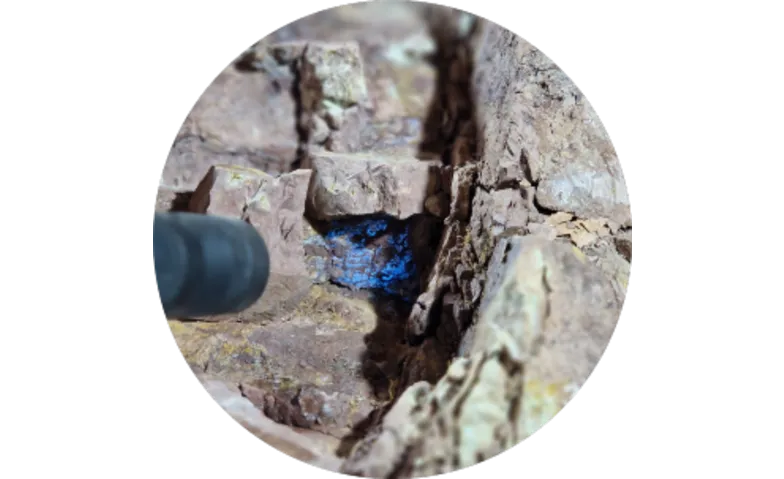
When speaking about paleontology, we most often only show the end result of a lengthy chain of work: beautiful skeletal remains, what researchers understand from them, and illustrations of the animals "in the flesh".
But we more rarely adress the steps it took for these bones to end up on an academic's desk, or be displayed in a museum: in a dusty lab, somewhere in an institute's basement, a preparator worked for countless days, months, or years so the fossils could see the light of day again, to be seen and preserved for as long as possibly can be for researchers and the public. This work is too often and unfairly overlooked, and not credited enough despite its crucial importance. No preparators=no paleontological research !
Fossil preparation is at the base of the paleontological research process, and we want to give you a chance to understand this work a little bit better. 🦖✨️
Ronja Sonnenschein and Blandine Hautier will talk about one of our most challenging fossil preparation projects to this day, and will give you an opportunity to "ask a preparator" anything you'd like to know about this work !
Excavations, lab work, counselling, research, model-making, mount-making.. so many jobs in one requiring creativity, knowledge and precision 🤓